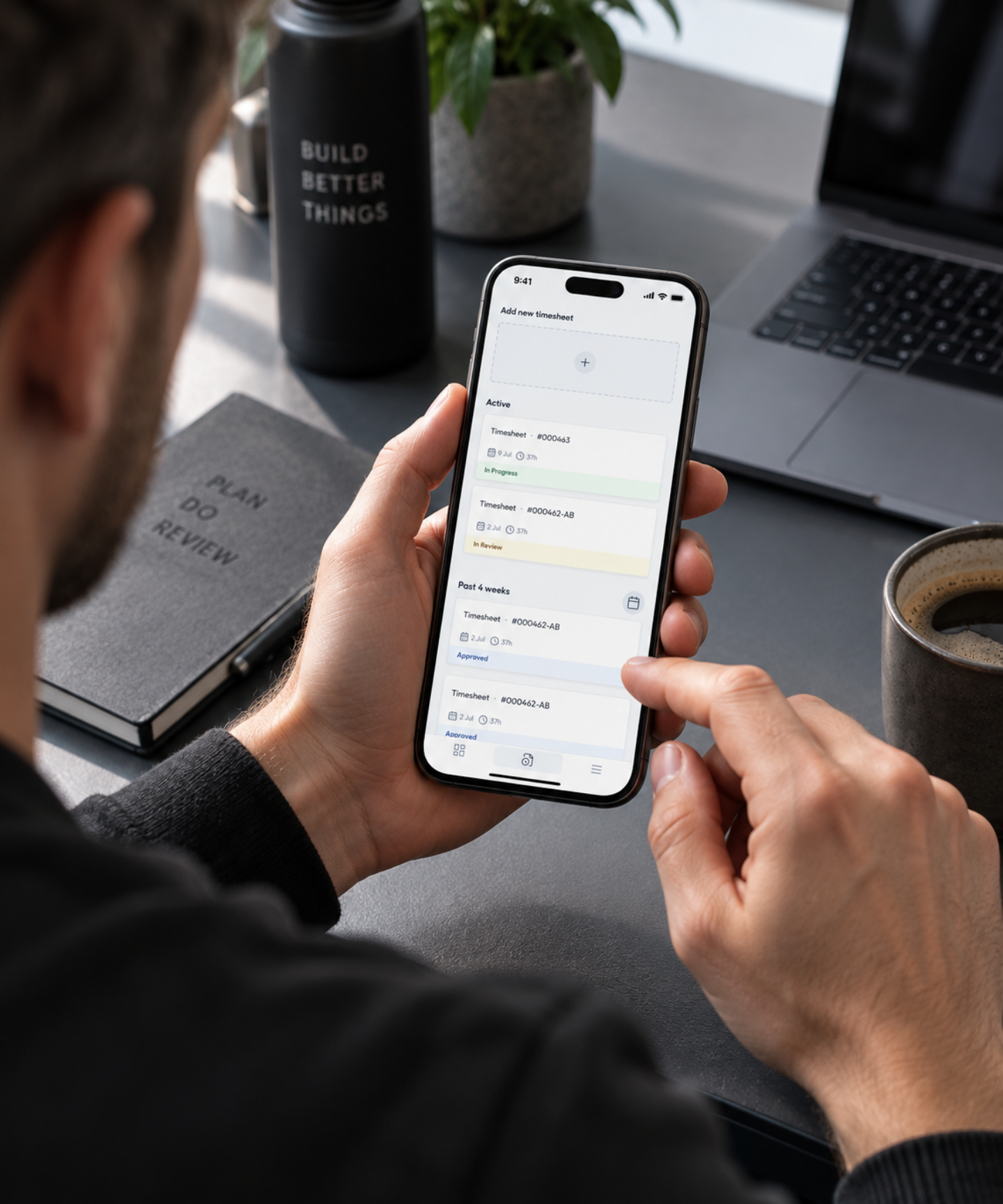
A workforce platform a field crew could only reach from a desk, rebuilt as one cross-platform app, from first design task to three feature areas live inside twelve months.
Year
2025–2026
Services
Mobile app, iOS & Android
Sector
Energy
Type
Timesheets
The outcome
12months
first design task to three feature areas live
185
tickets delivered across an epic-driven programme
80+
issues resolved through formal UAT before release
The challenge
No route to the back office from the field
EVOX Solutions, part of GEG Capital in Inverness, needed the core of their workforce platform – timesheets, absence requests and purchase-order approvals – available to a distributed field workforce who had no route to any of it beyond a desk.
A timesheet that can only be filed at a desk gets filed late, and from memory. Job codes, activities, basic against overtime, the rate each one attracts: all of it recalled at the end of the week rather than recorded as it happened. The cost of that lands twice: on the worker, who is doing admin on their own time, and on the business, which is paying against numbers nobody can check.
Zudu’s role:
Product design and cross-platform app build
Duration:
~12 months to three feature areas live; Phase 2 ran Jan–Mar 2026
Status:
Live
The platform
One app, shipped in stages
A single cross-platform app for iOS and Android (timesheets first, then purchase-order approvals, absence requests and push notifications), with the client on real builds within weeks of starting.
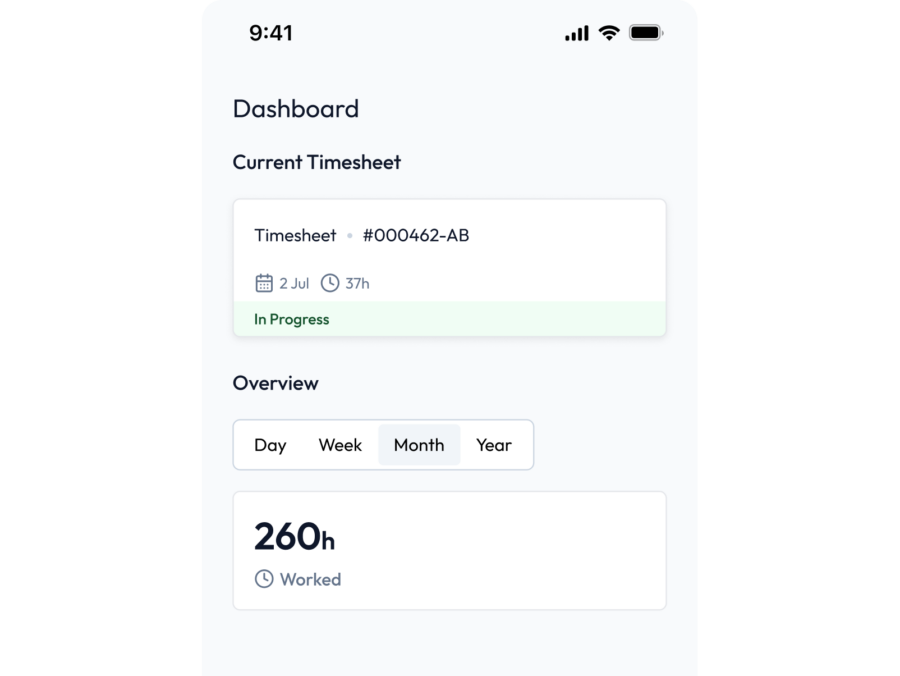
The week at a glance: hours worked, what they earned, and holiday entitlement sitting beside it rather than in another system.
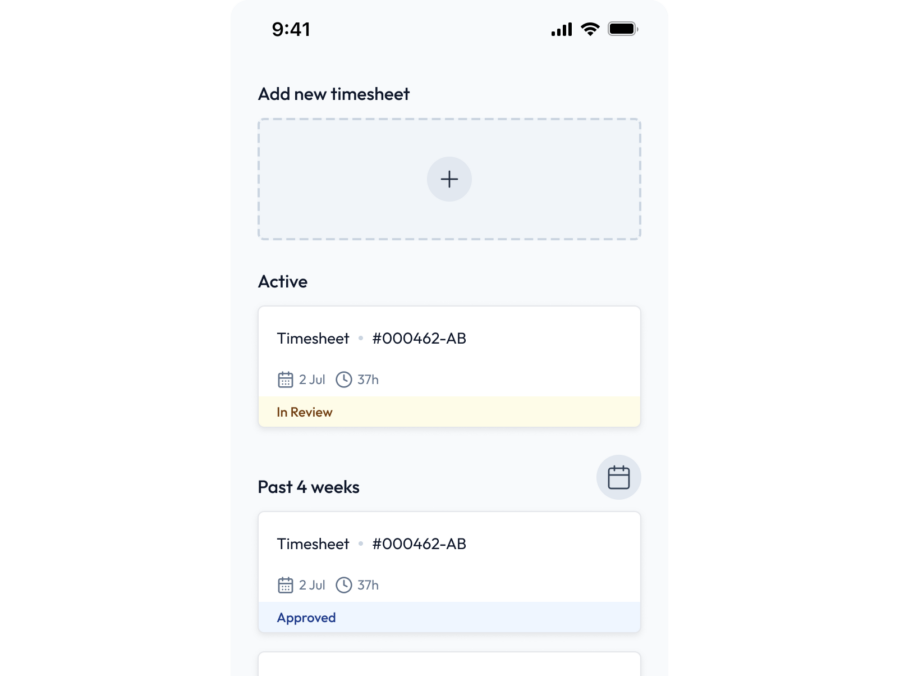
Active, in review, approved. A worker can see where every week sits without asking anyone.
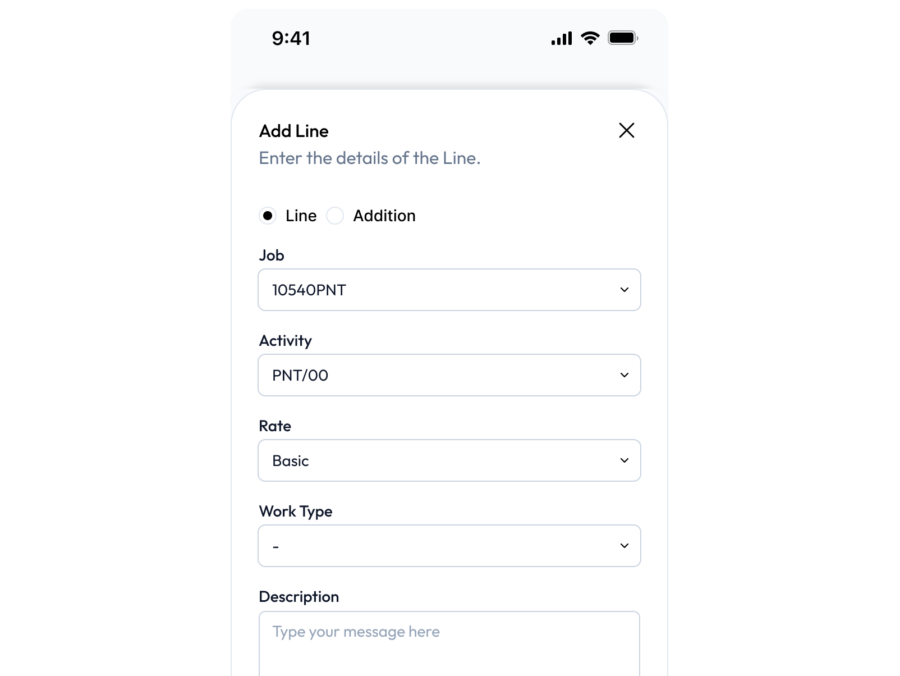
A line is a job: site, activity, work type, hours, and the rate they attract. Basic and overtime are priced as they are entered, not reconciled later.
01 · Design
Design came first
Onboarding flows, empty states and the awkward cases were worked through before feature development began - so the shape of the app was settled before anyone built a screen twice.
02 · Cadence
Real builds in weeks
Early TestFlight and Android builds put the app in the client’s hands within weeks rather than months, which is when feedback is still cheap to act on.
03 · Release
Proven one area at a time
Each feature area cleared a formal UAT before it shipped - 80+ issues resolved, down to device-specific fixes and edge cases like decimal rounding on hours.
04 · Handover
No lock-in at the end
Full source code transferred to EVOX’s own Azure DevOps at handover. No loose ends, and nothing that needs Zudu to keep the lights on.
The results
Three feature areas live, and the keys handed over
Timesheets, purchase-order approvals and absence requests are live on iOS and Android, each proven through its own UAT round before release. Phase 2 ran January to March 2026 and went live that April.
At handover the full source code moved to EVOX’s own Azure DevOps – the platform is theirs to run.
Status
Live, in production
Now
supporting EVOX Solutions’ distributed field workforce
3
desk-only
Feature areas live in the field
12 months
first design task to live
Design through to three feature areas
185
epic-driven
Tickets across the programme
80+
before release
Issues resolved through formal UAT
Stack & deliverables
Absence & holiday requestsBasic and overtime pricingCross-platform iOS & Android appIGRIS data integrationMicrosoft Entra sign-inPurchase-order approvalsSource handover to client Azure DevOpsTimesheet capture with job lines, work types and rates
Got a similar problem?
Talk to the people who built this.
Tell us what's blocking progress. You'll get a straight answer on whether we can help, and roughly what it would take.